
Asbestos Waste: Packaging, Documentation & Transport
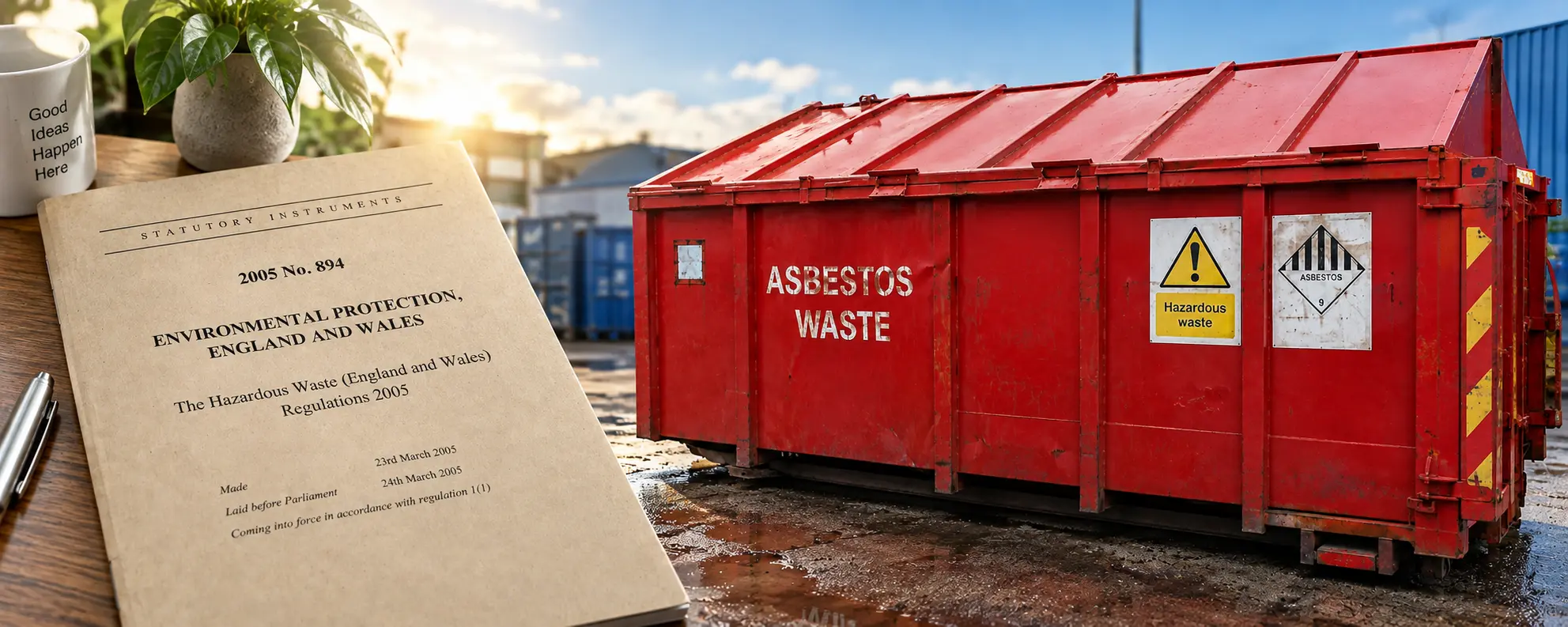
Asbestos Waste: Packaging, Documentation & Transport
One-day practical course
· Per-person: £325 + VAT per delegate
· In-house from £500 + VAT. Contact us for a per course quotation.
Asbestos waste must be correctly identified, packaged, documented and transported. The requirements depend on the type of waste and how it is being moved.
This practical course helps the people responsible for preparing, checking, consigning, loading or transporting asbestos waste understand their role and recognise when further advice is needed.
It is designed for asbestos waste producers and holders, waste coordinators, environmental and compliance managers, transport teams, carriers, vehicle crew, loaders and staff at transfer or disposal sites.
This course covers the management and transport of asbestos waste. It is not training to remove asbestos or carry out work that may disturb asbestos-containing materials.
What will the course cover?
Roles and responsibilities
Understand the responsibilities of the waste producer, holder, consignor, packer, loader, carrier and consignee—and how information should pass between them.
Waste types and transport routes
Explore the differences between bonded asbestos materials, fibrous waste and waste that may meet the conditions for ADR Special Provision 678. Learn why the correct route depends on the waste and the circumstances of the movement.
Waste and ADR requirements
Get an introduction to hazardous or special waste controls and how they relate to dangerous-goods transport requirements. Topics include UN 2212 and UN 2590, Class 9, and the relevance of Special Provisions 168 and 678.
Packaging, marking and labelling
Review packaging and containment requirements, asbestos warning labels, overpacks and the steps that help protect packaging from damage during handling and transport. The course also covers the specific container-bag provisions for qualifying SP 678 movements.
Vehicles, loading and transport
Consider load security, segregation, vehicle and container requirements, and when placards or orange plates may apply. Learn what to check before a load leaves site.
Consignment notes and transport documents
Work through hazardous-waste consignment notes and dangerous-goods transport documentation. Explore the information that may need to accompany the load, including supporting documents for SP 678 movements.
Incidents and rejected loads
Discuss how to respond if packaging is damaged, documentation is incomplete or a receiving site rejects a load. The course emphasises following site procedures and escalating issues appropriately.
Practical exercises
Use mock documents, labels and packaging examples to work through realistic scenarios, such as:
- Bagged fibrous asbestos waste
- Intact bonded asbestos products
- Oversized asbestos-containing materials
- Waste that may qualify for the SP 678 route
- Document and load checks before collection
Exercises use clean training materials only. They do not involve asbestos-containing waste or teach participants to open, repackage, cut or disturb asbestos.
What participants will gain
By the end of the course, participants should be better equipped to:
- Understand their role in the asbestos-waste transport chain
- Recognise the difference between waste requirements and ADR requirements
- Identify when further classification or specialist advice is needed
- Check packaging, marks, labels and documents against the movement
- Recognise when Special Provision 678 may be relevant
- Escalate damaged packaging, incorrect paperwork and rejected loads
Who should attend?
This course is suitable for:
- Asbestos waste producers and holders
- Waste coordinators and environmental or compliance managers
- Asbestos contractors’ transport and administration teams
- Waste carrier managers, drivers and vehicle crew
- Transfer station and disposal-site staff
- Consignors, packers and loaders
- Facilities and site managers who arrange asbestos-waste collections
Course content should be matched to participants’ responsibilities. Where dangerous-goods training is required, this course may support role-specific training when appropriately designed and recorded. It does not replace an ADR driver training certificate where one is required.
Delivery and price
One day | £325 + VAT per delegate
Available as an open course or in-company at your premises. In-company delivery can be tailored to your roles, procedures and document examples.
Book Asbestos Waste: Packaging, Documentation & Transport
Give your team the practical knowledge to check asbestos-waste packaging, paperwork and transport arrangements with greater confidence.
Contact Roadsafe Europe to discuss course dates, in-company delivery or the needs of your operation.
Requirements depend on the waste, the movement and the relevant UK jurisdiction. This course provides training and awareness; it does not replace a waste classification, site-specific procedure or specialist advice. See HSE guidance on asbestos and dangerous goods carriage, DfT/HSENI guidance on ADR 2025 and asbestos, and GOV.UK hazardous-waste consignment-note guidance.